


Resources
New
Featured Podcasts
Clearing the Bases host Jimmy Filingeri sits down with Bill Taylor, author of Managing Sports Conflict and founder of the Sports Conflict Lab to discuss why conflict isn’t always negative, how emotions can prevent productive conversations, what may really be hiding beneath a disagreement, and how properly managed conflict can actually strengthen relationships, accountability, leadership, and team culture.

My latest guest is Bill Taylor, championship-winning collegiate coach, founder of Sports Conflict Lab, and author of Managing Sports Conflict: Five Tools to Master Conflict.
⚾ Managing emotion
⚾ Effective communication
⚾ Looking “Below the Line” for the real interests driving the conflict
⚾ Finding win-win, creative solutions
⚾ Building trust through follow-through
Bill and I discuss why conflict isn’t always negative, how emotions can prevent productive conversations, what may really be hiding beneath a disagreement, and how properly managed conflict can actually strengthen relationships, accountability, leadership, and team culture.
Every coach, parent, administrator, and sports leader will take something valuable away from this conversation.
🎧 Listen now to the latest episode of Clearing The Bases!
🌐 theCTBshow.net
CLICK THE LINK BELOW

We sit down with Bill Taylor, founder of Sports Conflict Lab and a former championship-winning cross country and track coach at the DI and NAIA level. Bill has recorded 1 national championship, 16 conference championships, 28 coach of the year honors, 57 All-Americans and a M.Ed. in conflict management.
Bill brings a unique perspective to the conversation, combining years of coaching experience with his work helping athletes, coaches, and organizations better understand and manage conflict.
CLICK VIDEO LINK BELOW

In this episode of Beyond the Scoreboard, Coach Justin Furtado sits down with Bill Taylor, author of Managing Sports Conflict and founder of the Sports Conflict Lab, to discuss how coaches, parents, and athletic directors can turn team friction into a competitive advantage.
With 22 years of experience as a collegiate head coach across NAIA and Division I, winning 16 conference titles, a national championship, and earning Coach of the Year honors, Bill shares the exact moment a major organizational dispute drove him to earn a master's degree in conflict management.
Together, they break down why 70% of people are conflict avoiders, how unmanaged tension destroys team culture, and why emotional regulation is the foundational first step in crisis negotiation.
In This Episode:
→ Why most people avoid conflict and how unaddressed tension multiplies over time
→ What crisis negotiation tactics teach us about bringing down emotional states during games
→ Why coaches must master self-regulation and prioritize process over results
→ How to use open-ended intent questions to help athletes and parents reach logical conclusions themselves
→ The danger of relying on text messages or emails for feedback and correction
→ The "below the line" tool for uncovering hidden interests like respect versus surface issues like playing time
→ Why the goal of conflict resolution should be a win-win solution rather than crushing the other person
→ How youth sports organizations can implement clear escalation policies and 24-hour rules
This episode is designed for basketball parents navigating youth sports pressure and parent-coach relationships, youth basketball coaches, trainers, and program directors looking for better practice and sideline management strategies, and sports enthusiasts interested in leadership, sports psychology, and team dynamics.
CLICK VIDEO LINK BELOW

CLICK LINK BELOW

Bill explains why conflict is inevitable in every relationship and why avoiding it usually makes things worse. We talk about the power imbalance between athletes and coaches, and why young athletes may be afraid to speak up because they worry about losing opportunities, being removed from a team, or changing how their coach sees them.
We also talk about the role parents and coaches play in creating an environment where athletes feel safe communicating. Bill shares why parents should give their athletes the opportunity to work through conflict themselves when it is safe to do so, rather than immediately stepping in. He explains how these experiences can help young athletes become more bold, courageous, and confident.
In this episode you will hear:
Why avoiding conflict can make problems bigger
How athletes can learn to speak up to coaches
Why communication needs to come from leadership
How parents can support athletes without taking over
Why emotions need to be managed before solving a conflict
How conflict can strengthen relationships and team culture
Why working through difficult situations helps athletes grow
This conversation is a powerful reminder that confidence is not just about performing skills. It is also about learning how to communicate, handle uncomfortable situations, and trust yourself enough to have difficult conversations.
CLICK LINK BELOW

CLINK BELOW

In Episode 475 of The Gametime Guru, Shane Larson sits down with Bill Taylor, longtime collegiate head coach, national championship coach, conflict management expert, and author of Managing Sports Conflict: 5 Tools to Master Conflict.
After 22 years as a collegiate head coach, including 10 years at Northwest University and 12 years at the NCAA Division I level, Bill experienced firsthand just how powerful conflict can become inside a sports organization. That experience ultimately led him to pursue a master's degree in conflict management and develop practical tools specifically for the sports world.
And as Bill explains in this conversation, conflict itself isn't necessarily the problem. How we manage conflict determines whether relationships, teams, and cultures become stronger or fall apart.
This episode is especially valuable for coaches, athletic directors, athletes, sports parents, administrators, business leaders, and anyone responsible for leading people.
You'll learn:
Why conflict is inevitable whenever relationships and expectations are involved
Why conflict can actually strengthen a team when handled correctly
How unresolved conflict can quietly hijack the culture you've worked to build
Why managing emotion has to happen before conflict can truly be resolved
How active listening changes difficult conversations
Why Bill avoids handling sensitive conversations through text or email
What Bill means by going "below the line" to discover what a conflict is really about
Why the stated issue isn't always the REAL issue
How coaches can create multiple solutions instead of forcing one outcome
Why successful conflict resolution should create a win-win, not a winner and loser
How trust and follow-through determine whether a conflict is actually resolved
How these principles apply beyond sports to leadership, work, marriage, parenting, and everyday relationships
One of the most powerful concepts Bill shares is that conflict often begins with unmet expectations. Coaches, athletes, parents, administrators, and teammates all bring different experiences and expectations into a relationship. Learning how to recognize those differences and work through them can dramatically impact communication, trust, performance, and culture.
Bill also shares the story behind his own coaching career, including building a program with extremely limited resources while believing from the beginning that they could eventually win a national championship. He explains why one of his greatest strengths as a coach became helping athletes remove the limits they had placed on themselves.
If you're involved in youth sports, high school sports, college athletics, coaching, athletic administration, leadership, team building, or conflict resolution, this is an episode worth taking notes on.
CLICK VIDEO LINK BELOW

CLICK VIDEO LINK BELOW

Bill Taylor spent 28 years as a collegiate head coach, winning a national championship, 16 conference titles, and 28 Coach of the Year honors. Then he walked away, got a Master's in Conflict Management, and built Sports Conflict Lab — because he realized the one skill that was missing was the most important one.
In this conversation we cover:
— The moment he realized something critical was missing after all that winning
— What unmanaged conflict actually costs a team, a coach, and a family
— Why conflict is both the greatest threat and the greatest opportunity in sports
— How parents are often the biggest source of conflict in youth sports — and the last to know it
— What you can do differently this weekend on the sideline
— Building a business with his wife Tabetha after 37 years of marriage
— What he wishes someone had taught him in year one of coaching
One of the most honest conversations The Tribe has had about what actually happens behind the scoreboard.
CLICK VIDEO LINK BELOW

Over a remarkable 28-year coaching career in track & field and cross country, including 22 years as a collegiate head coach and administrator, Bill’s leadership has produced a National Championship (NAIA), 16 Conference Titles (12 NCAA Division I, 4 NAIA), and 28 Coach of the Year honors.
On this episode Mike & Bill discuss why conflict is unavoidable in sports and relationships. Taylor explains how a difficult conflict led him to study conflict management more deeply. He introduces five key tools: managing emotions, communicating effectively, looking below the surface of stated issues, seeking win-win solutions, and following through to build trust. The conversation applies these tools to common coaching challenges such as playing-time discussions, team accountability, emotional parents, and maintaining a strong culture. Taylor encourages coaches to stop avoiding or improvising through conflict and instead establish clear expectations and a deliberate conflict-resolution process.
Follow us on Twitter and Instagram @hoopheadspod for the latest updates on episodes, guests, and events from the Hoop Heads Pod.
Make sure you’re subscribed to the Hoop Heads Pod on Apple, Spotify, or wherever you get your podcasts and while you’re there please leave us a 5 star rating and review. Your ratings help your friends and coaching colleagues find the show. If you really love what you’re hearing recommend the Hoop Heads Pod to someone and get them to join you as a part of Hoop Heads Nation.
You will definitely want to grab your notebook to jot down some ideas as you listen to this episode with Bill Taylor, author of the book Managing Sports Conflict and the founder of the Sports Conflict Lab.
CLICK VIDEO LINK BELOW

Whether it’s a disagreement over playing time, tension between teammates, a frustrated parent, or an uncomfortable conversation with a coach, conflict is inevitable in sports. But according to Bill Taylor, founder of Sports Conflict Lab and author of Managing Sports Conflict: Five Tools to Master Conflict, learning how to handle those moments can actually make teams, relationships, and young athletes stronger.
In this episode of Our Kids Play Hockey, Lee Elias, Mike Bonelli, and Christie Casciano-Burns sit down with Bill to explore why healthy conflict is essential for growth—and why teams that never challenge one another may actually be limiting their potential.
🏒 In this episode, you’ll hear:
• Why avoiding conflict usually makes the eventual problem bigger
• How healthy conflict can improve trust, communication, accountability, and team culture
• Why coaches should establish a conflict-resolution process before the season gets difficult
• The danger of “three-way conflict” when players or parents complain to everyone except the person involved
• Why parents should ask questions instead of immediately accusing or correcting
• How emotional regulation can completely change the outcome of a difficult conversation
• Why a 24-hour cooling-off period can help parents and coaches communicate more effectively
• The difference between hearing someone and actually practicing active listening
• How genuine apologies can repair trust after a coach, parent, or player makes a mistake
• Why curiosity is more productive than judgment during conflict
• How parents can accidentally rob their kids of important life skills by solving every disagreement for them
• Why championship-level teams often become stronger by learning how to work through uncomfortable moments together
One of the biggest takeaways from Bill is simple: conflict is not a battle to win—it’s a problem to solve.
When athletes learn to manage their emotions, speak directly to teammates, listen before reacting, and work through disagreement, they aren’t just becoming better hockey players. They’re building communication and relationship skills they can carry for the rest of their lives.
📘 Bill Taylor is the founder and CEO of Sports Conflict Lab and the author of Managing Sports Conflict: Five Tools to Master Conflict. Learn more about Bill’s work, conflict-management education, and resources at SportsConflictLab.com.
If you’re a hockey parent, coach, or team leader, this is an episode worth sharing with your entire hockey community.
CLICK VIDEO LINK BELOW

Conflict is part of every hockey season. The question isn’t whether it will happen—it’s whether you’ll have the courage and communication skills to handle it well.
On this episode of The Ride to The Rink, Lee, Christie, Mike, and Bill Taylor of Sports Conflict Lab talk directly to young hockey players about one of the hardest skills to learn in sports: having uncomfortable conversations.
Instead of complaining to someone else, avoiding the problem, or assuming another person has bad intentions, the crew explains why great teammates learn to go directly to the source, ask thoughtful questions, listen, and work toward a solution.
🏒 In this episode, players will learn:
Why talking directly to a teammate, coach, or parent is better than holding frustration inside
How asking questions can keep a difficult conversation from becoming an argument
Why your teammate may not even realize their behavior is bothering you
How to approach conflict without accusing or attacking someone
Why you should assume positive intentions before assuming the worst
What to do when someone reacts defensively
Why one difficult conversation can still make an impact—even if nothing changes immediately
How parents and players can communicate about their different expectations
Why being willing to have hard conversations is an important leadership skill
How to recognize when the uncomfortable conversation you need to have is actually with yourself
One of the biggest lessons? You can’t control how someone responds, but you can control how you approach the conversation.
Sometimes your teammate might get defensive. Sometimes your coach may explain something you hadn’t considered. Sometimes you may realize that you need to change, too.
That’s part of growing as an athlete, a teammate, and a person.
CLICK THE VIDEO LINK BELOW

CLICK VIDEO LINK BELOW

CLICK VIDEO LINK BELOW

Holding a Master’s degree in Conflict Management from Lipscomb University, Bill spent 28 years coaching and leading collegiate athletic programs, earning a National Championship, 16 Conference Titles, and 28 Coach of the Year honors. His work focuses on transforming conflict into growth, building trust, and developing leaders both on and off the field.
A certified executive coach, mental performance coach, and facilitator, Bill combines decades of coaching experience with expertise in leadership development and conflict resolution to help individuals and organizations perform at their best with integrity.


Topics include:
The statistics on workplace conflict
Why conflict is an essential part of building relationships and organizations
The risks of mismanaged or avoided conflict
The benefits of correctly managed conflict
What's at the core of most workplace conflicts
How to manage conflict successfully.
CLICK AUDIO BELOW
Videos
Visit our Youtube Channel for informative videos and free resources.
All Videos
All Videos

Tech Tuesday - Bill Taylor and Managing Sports Conflict
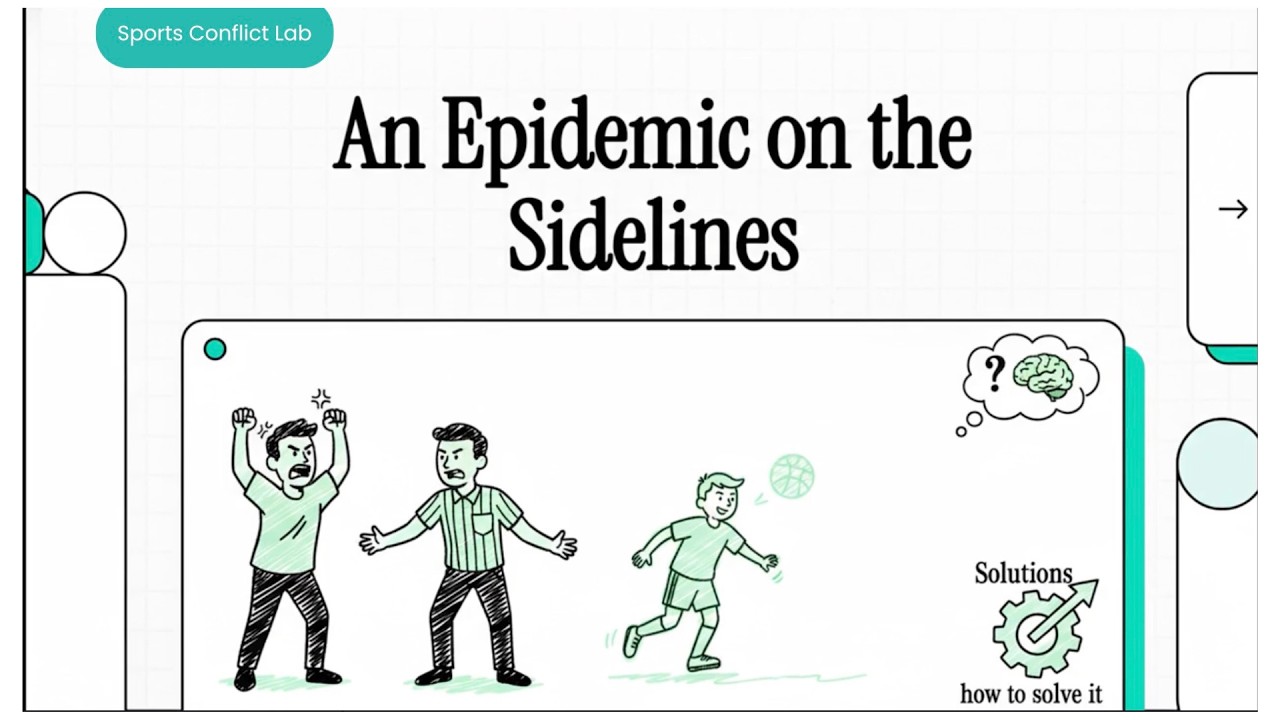
SCL An Epidemic On the Sidelines

The Importance of Conflict – Conflict Won’t Wait!

Why did you create Sports Conflict lab?
New Featured Tool
Conflict in sport happens fast: on the sideline, in the locker room, in the group chat. Our new SCL Field Cards are free one-page tools that tell you what to do and what to say in those moments, with six practical tips per card. Download our current card today, and check back as we add more.
Emotions are at the heart of conflict. Learning to manage your own emotions and positively influence those of others can turn conflict into an opportunity for connection, collaboration, and growth.
Download our FREE Field Card for practical strategies to navigate emotions and master conflict with confidence.

Resource Cards & Tools
Free Downloadable Resource cards and tools. Just check on the image to download.
In youth sports, win-lose is just lose-lose in disguise. This free field card gives parents six ways to find solutions that work for your child, the coach, and other families.


The Continue, Stop, Start tool is a simple, powerful way to gather honest feedback; whether you're a parent, coach, or leader.
Ask three questions. Listen. That's it.
It removes emotion from the conversation, creates a safe space to speak freely, and helps you see reality through someone else's eyes.